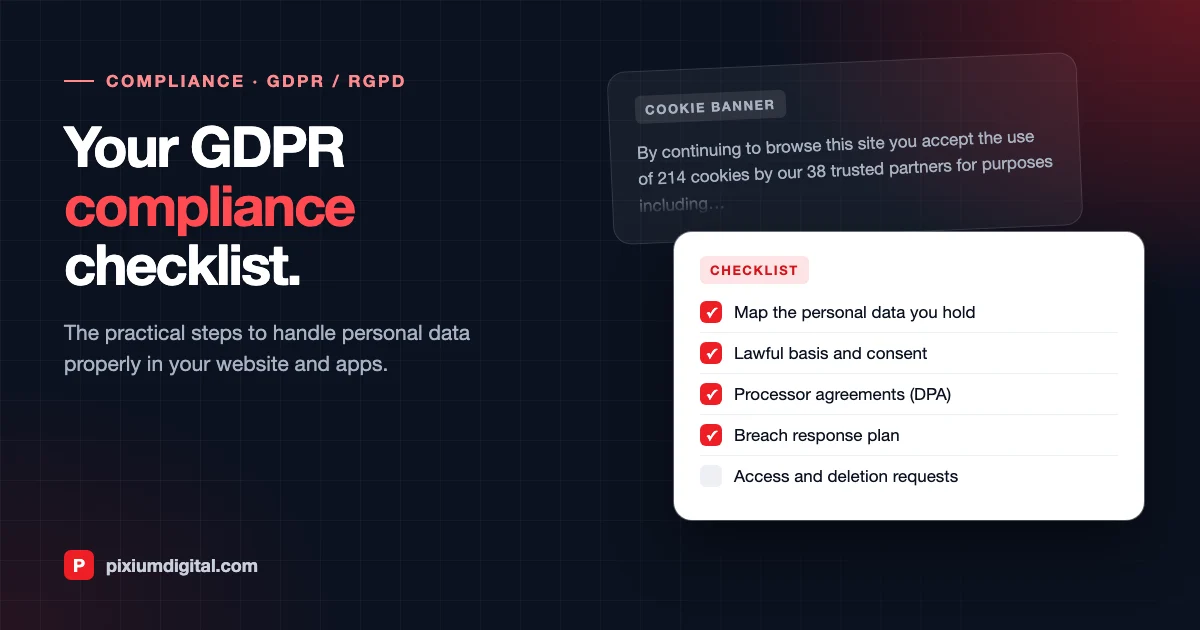
GDPR and RGPD Compliance Checklist
Understanding GDPR in Singapore and RGPD in France: A Simple Compliance Checklist for Your Software Application
In today's digital age, data privacy is more important than ever. With increasing concerns about personal data protection, two major regulations — the General Data Protection Regulation (GDPR) in the European Union and the Personal Data Protection Act (PDPA) in Singapore — play a crucial role in shaping how businesses handle personal data. If you're a software or web development company, ensuring your application complies with these regulations is critical.
In this article, we'll break down the objectives of GDPR in Singapore and RGPD in France, provide a clear compliance checklist, and outline the risks of non-compliance.
What is GDPR and RGPD?
Both GDPR (General Data Protection Regulation) and RGPD (Règlement Général sur la Protection des Données) refer to the same regulation but in different regions.
GDPR governs the protection of personal data in the European Union (EU) and affects businesses globally that collect or process data of EU citizens. RGPD is the French version of the same regulation, specifically tailored for businesses operating in France. On the other hand, Singapore's PDPA (Personal Data Protection Act) has similar objectives of safeguarding personal data within Singapore and applies to businesses collecting or processing the data of individuals within the country.
The Objectives of GDPR/RGPD and PDPA
The primary goals of these regulations are:
Data Protection: Safeguarding the privacy of individuals by limiting unauthorized access to their personal data. Transparency: Ensuring businesses are clear about what data they collect and how it is used. Accountability: Holding organizations accountable for the protection of personal data. Empowerment of Individuals: Giving individuals more control over their own data through rights like data access, rectification, and erasure.
Why Should You Care About GDPR and RGPD Compliance?
Not complying with GDPR or RGPD can expose your business to severe risks, including:
Hefty Fines: Non-compliance can lead to fines up to €20 million or 4% of annual global turnover, whichever is higher. Legal Consequences: Businesses could face lawsuits from individuals whose data has been mishandled. Reputation Damage: Failure to comply can erode trust with your users and customers, damaging your brand image. Operational Disruption: In some cases, regulators can impose sanctions that halt operations or limit data processing.
GDPR and RGPD Compliance Checklist for Your Software Application
Ensure your application is compliant with GDPR, RGPD, and PDPA by checking off the following steps:
-
1. Audit and Map Your Data
Identify the types of personal data you collect (e.g., name, email, address, etc.). Map where and how this data is stored and processed. Determine if any sensitive data (e.g., health information) is handled.
-
2. Obtain Explicit Consent
Ensure users give clear, unambiguous consent to collect and process their personal data. Provide users with an easy way to withdraw consent at any time. Implement consent forms that are easy to understand and transparent.
-
3. Implement Data Protection by Design
Incorporate privacy features into your application from the ground up. Use encryption and anonymization techniques to secure data. Minimize the data you collect to what is strictly necessary.
Our enterprise software development team builds privacy-first applications with GDPR compliance built into the architecture from day one.
-
4. Update Your Privacy Policy
Make sure your privacy policy clearly explains what data you collect, why you collect it, and how it will be used. Include information on how users can exercise their rights (e.g., data access, deletion). Make the privacy policy easily accessible on your website or within your application.
-
5. Provide Data Access and Portability
Allow users to access the data you hold about them in a structured, commonly used format. Implement mechanisms for users to transfer their data to another service provider.
-
6. Allow Users to Request Data Deletion
Give users the option to request the deletion of their personal data (the "right to be forgotten"). Implement a process for securely erasing user data when requested.
-
7. Ensure Secure Data Storage
Use secure servers and technologies to store user data (e.g., SSL certificates, encryption). Conduct regular security audits and penetration tests to identify vulnerabilities.
-
8. Appoint a Data Protection Officer (DPO) if Necessary
If your business processes large amounts of personal data or handles sensitive information, appoint a DPO. The DPO will oversee compliance, data protection practices, and act as a point of contact for data protection authorities.
-
9. Train Your Staff
Regularly educate your team on data protection practices. Conduct training to ensure everyone understands their responsibilities in protecting user data.
-
10. Prepare for Data Breaches
Implement a data breach response plan. Ensure you can notify users and relevant authorities within the required timeframes (72 hours for GDPR/RGPD). Have protocols for investigating and mitigating breaches quickly.
The Risks of Non-Compliance
If your application fails to comply with GDPR, RGPD, or PDPA, you risk:
Fines and Penalties: GDPR fines can reach up to €20 million or 4% of global revenue. Loss of Business: Customers and users are increasingly aware of data privacy; non-compliance could result in losing their trust. Legal Liabilities: Lawsuits can be filed by individuals whose data was mishandled. Damage to Reputation: Failing to protect user data can lead to negative press, damaging your brand's reputation.
Steps to Take Now
As a software company, it's vital to act now to ensure GDPR, RGPD, and PDPA compliance. Follow this checklist, update your data practices, and invest in security measures to safeguard your users' personal data. By ensuring compliance, you not only avoid risks but also build trust with your customers and clients.
For assistance with ensuring compliance for your software or web development projects, contact Pixium Digital for consulting on digital compliance and implementing privacy-by-design in your software.